
Why Most Real Estate Investors Eventually Stop Buying Single-Family Rentals and Transition to Commercial

Updated: Jun 11
For many investors, single-family rentals are the gateway into real estate investing. The path often starts with a house hack, a rental property purchased near home, or an accidental landlord situation after moving. Over time, investors acquire additional properties, build equity, collect rent checks, and begin to experience the wealth-building benefits of real estate ownership.

However, something interesting happens as investors gain experience. Many of the most successful real estate investors eventually stop buying single-family rentals altogether. It's not because single-family rentals don't work. In fact, they can be an excellent vehicle for building initial wealth, and it’s how I got started as well. Instead, experienced investors often reach a point where they realize that their most valuable asset is no longer capital—it's time and management overhead.
Single-Family Rentals Are Great for Getting Started
Single-family rentals offer several advantages for newer investors:
- Familiar asset type
- Relatively low barriers to entry
- Easy financing options
- Strong appreciation potential
- Tax benefits
- Predictable demand
For many investors, single-family rentals provide the first opportunity to create wealth outside of a traditional job. A rental property can teach valuable lessons about financing, cash flow, maintenance, tenant management, and market cycles. These experiences often serve as the foundation for a successful investing career.
However, challenges begin to emerge as investors attempt to scale.
The Scalability Problem
Owning one rental property is manageable. Owning three rental properties is still manageable. Owning ten rental properties is an entirely different business. Each additional property brings more tenants, more maintenance requests, more lease renewals, more turnovers, more insurance policies, more accounting, and more operational complexity.
Many investors eventually discover that they haven't built a passive investment portfolio—they've built another full-time job. Even with property management in place, investors are still responsible for making major decisions, approving repairs, monitoring performance, reviewing financials, and managing capital expenditures. As portfolios grow, so does the time commitment.
Wealthy Investors Prioritize Time

One of the biggest mindset shifts successful investors make is recognizing the difference between owning real estate and investing in real estate. Owning real estate often requires active involvement, while investing in real estate can be entirely passive. As net worth grows, investors begin to place greater value on their time.
Business owners want to focus on growing their companies. Doctors want to spend more time with family. Executives want flexibility and freedom. Many experienced investors reach a point where they ask a simple question: "Would I rather manage ten rental houses, or own a small percentage of a professionally managed portfolio worth tens of millions of dollars?" Increasingly, investors choose the latter.
The Law of Bigger Numbers
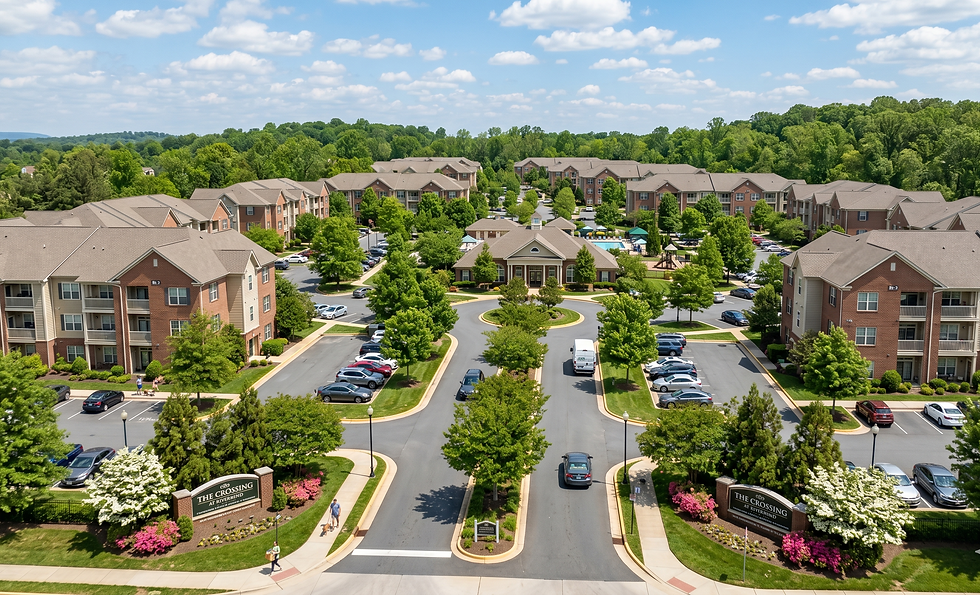
Another reason investors transition away from single-family rentals is efficiency. Consider two scenarios:
- Investor A owns five rental homes worth $400,000 each.
- Investor B owns an interest in a multifamily fund that owns a 200-unit apartment community.
While both investors own real estate, the scale is dramatically different. Larger properties often benefit from:
- Professional management
- On-site staff
- Economies of scale
- Greater operational efficiencies
- Multiple income streams
- Reduced vacancy risk
If one tenant moves out of a single-family home, occupancy drops to 0%. If one tenant moves out of a 200-unit apartment building, occupancy remains above 99%. Many experienced investors recognize that larger assets often provide more predictable operations and greater opportunities to create value.
Diversification Matters

Single-family investors frequently accumulate properties in a single market. While this can work well, it also concentrates risk. A professionally managed real estate fund may provide exposure to:
- Multiple properties
- Multiple submarkets
- Hundreds of tenants
- Diverse income streams
- Different acquisition opportunities
Rather than relying on the success of one or two properties, investors benefit from the performance of an entire portfolio. Diversification can help reduce risk while providing access to opportunities that would be difficult to pursue individually.
The Goal Was Never More Doors
Many investors become fixated on the number of properties they own: five doors, ten doors, twenty doors, fifty doors. But the true goal is rarely door count. The real objective is financial freedom, passive income, time with family, flexibility, and building wealth that can outlive you and benefit future generations.
The most successful investors eventually stop measuring success by the number of properties they own and start measuring success by the quality of life their investments create.
The Natural Evolution of a Real Estate Investor
For many investors, the journey looks something like this:
1. Buy a primary residence.
2. Purchase a rental property.
3. Build a portfolio of single-family rentals.
4. Realize scaling becomes increasingly difficult.
5. Transition toward larger commercial assets and passive investments.
This isn't a sign that single-family rentals failed; it's a sign that the investor has evolved. The skills learned through active ownership create the foundation for investing at a larger scale.

Final Thoughts
Single-family rentals remain one of the best ways to start investing in real estate. But for many experienced investors, they are not the final destination. As portfolios grow and priorities change, investors often seek opportunities that provide greater scalability, diversification, and freedom.
The goal isn't simply to own more real estate; the goal is to build lasting wealth while reclaiming your most valuable asset—your time. For many investors, professionally managed real estate funds represent the next step in that journey.
Happy Investing ✌️

— Cassidy Burns
Founder, BPG Holdings




Comments